 Infosha
ეს ამბავი გადმოცემაა და ასე მოგითხრობთ. ნამდვილი ისტორია ქვემოთაა. This story is a legend and is told as one. The real history is below.
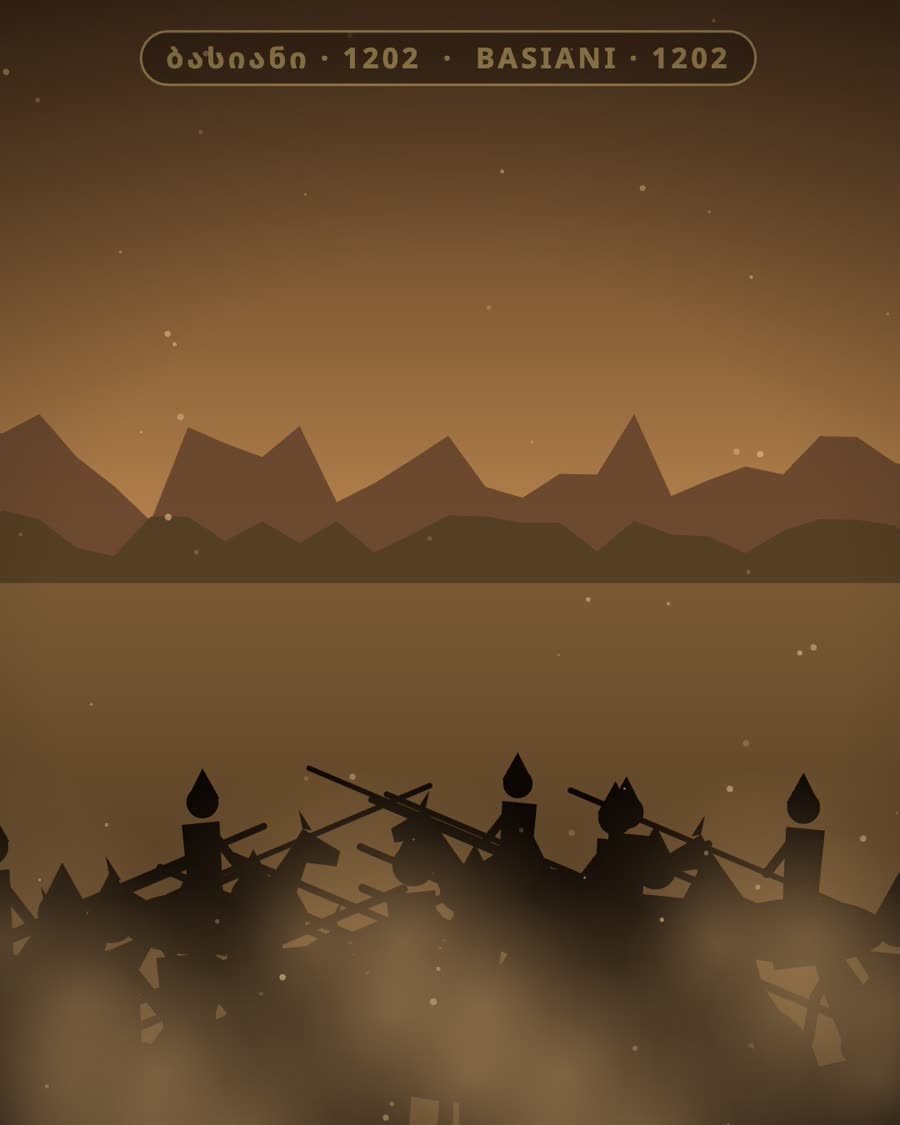
1202 წელი. რუმის სულთანმა უზარმაზარი ლაშქარი შეკრიბა და საქართველოს დაემუქრა. მეფე თამარის ჯარი ბასიანის ველზე დახვდა მტერს, თბილისი კი შიშით ელოდა ამბავს. დღეები გადიოდა — ამბავი არ ჩანდა.
1202. The Sultan of Rum gathered a vast army and threatened Georgia. Queen Tamar’s army met the enemy on the plain of Basiani, and Tbilisi waited in fear for news. The days went by, and no news came.
ამბობენ, ბრძოლა რომ დასრულდა, ერთი დაჭრილი მეომარი ცხენზე შეხტა. სამი დღე და სამი ღამე მიქროდა — მთებზე, მდინარეებზე, ქარში. ცხენი ორჯერ გამოიცვალა, თვითონ კი არც ერთხელ არ შეჩერებულა.
They say that when the battle was over, a wounded warrior leapt onto his horse. For three days and three nights he raced on, over mountains and rivers, into the wind. He changed horses twice, but he himself never once stopped.
მესამე ღამეს თბილისის კარიბჭეს მიაღწია. ცხენიდან ჩამოვარდა, მიწაზე დაეცა და მთელი ძალით შესძახა: „გავიმარჯვეთ!“ ეს სიტყვა ქალაქში პირიდან პირში გადავიდა — ქუჩიდან ქუჩას, სახლიდან სახლს, — და ყველა ზარმა დარეკა.
On the third night he reached the gate of Tbilisi. He slid from his horse, fell to the ground and cried with all his strength: “We have won!” The word passed from mouth to mouth across the city, from street to street and house to house, and every bell rang out.
იმ ღამით თბილისში არავის სძინებია. შიში სიხარულად იქცა: დედები ტიროდნენ და იცინოდნენ. ამბობენ, დაჭრილი მეომარი გადარჩა, ხალხმა კი მის შვილებს სიხარულიძეები შეარქვა — მათ, ვისმა მამამაც სიხარული მოიტანა.
No one in Tbilisi slept that night. Fear turned to joy: mothers wept and laughed at once. They say the wounded warrior lived, and the people called his children Sikharulidze: the children of the man who brought joy.

შენ სიხარულიძე ხარ. შენ კარგი ამბავი ხარ.
You are a Sikharulidze. You are the good news.
ბასიანის ბრძოლა XIII საუკუნის დასაწყისში მოხდა (ჩვეულებრივ 1202 წლით თარიღდება): მეფე თამარის ჯარმა დავით სოსლანის მეთაურობით რუმის სულთნის, რუქნ ად-დინის, ლაშქარი დაამარცხა.
The Battle of Basiani was fought in the early 13th century (it is usually dated 1202): Queen Tamar’s army under David Soslan defeated the army of Rukn ad-Din, Sultan of Rum.
გვარის ფუძეში ქართული სიტყვა „სიხარული“ ისმის, „-ძე“ კი შვილს ნიშნავს.
In the root one hears the Georgian word “sikharuli”, joy, and “-dze” means son.
ანტონ სიხარულიძე (დ. 1976) — ფიგურისტი, წყვილთა სრიალში ოლიმპიური ჩემპიონი (2002).
Anton Sikharulidze (born 1976): figure skater, Olympic champion in pairs skating (2002).
როგორია სიხარულიძეების გვარის ისტორია?
ბასიანის ბრძოლა XIII საუკუნის დასაწყისში მოხდა (ჩვეულებრივ 1202 წლით თარიღდება): მეფე თამარის ჯარმა დავით სოსლანის მეთაურობით რუმის სულთნის, რუქნ ად-დინის, ლაშქარი დაამარცხა.
What is the history of the Sikharulidze surname?
The Battle of Basiani was fought in the early 13th century (it is usually dated 1202): Queen Tamar’s army under David Soslan defeated the army of Rukn ad-Din, Sultan of Rum.
როგორ ვიპოვო სიხარულიძის ტელეფონის ნომერი?
ჩამოტვირთე Infosha და აკრიფე სახელი და გვარი, მაგალითად „მარიამ სიხარულიძე“ — შედეგში ტელეფონის ნომერს ნახავ. ძებნა დააზუსტე ქალაქით და პროფესიით. თუ ადამიანი ჯერ არ ჩანს ძებნის შედეგებში, სცადე სხვა დაწერილობაც: Sikharulidze, Sixarulidze, Сихарулидзе.
How do I find the phone number of someone named Sikharulidze?
Download Infosha and type the first name and the surname, for example “Mariam Sikharulidze”, and the result shows the phone number. Narrow it down by city and profession. If the person is not in the search results yet, try another spelling: Sikharulidze, Sixarulidze, Сихарулидзе.
როგორ იწერება სიხარულიძე ლათინურად და რუსულად?
ლათინურად — Sikharulidze (ტელეფონზე ხშირად ასეც წერენ: Sixarulidze), რუსულად — Сихарулидзе.
How is სიხარულიძე written in Latin letters and in Russian?
In Latin letters it is Sikharulidze (people also type Sixarulidze); in Russian, Сихарулидзе.
ამბავი და ვიდეო — Infosha-სგან · Story and video by Infosha