 Infosha
ეს ამბავი გადმოცემაა და ასე მოგითხრობთ. ნამდვილი ისტორია ქვემოთაა. This story is a legend and is told as one. The real history is below.
ამბობენ, ეს მტრის ერთ-ერთი შემოსევისას მოხდა. მთის მონასტერს ცეცხლი წაუკიდეს — ეკლესიას, წიგნებს და სკოლას, სადაც ბერები ბავშვებს წერა-კითხვას ასწავლიდნენ. მტერმა თქვა: „ამ ხალხის ანბანი ნაცარს შევურიეთ.“
They say it happened during one of the enemy's invasions. The monastery in the mountains was set on fire: the church, the books, and the school where the monks taught children to read and write. The enemy said: “We have turned this people's alphabet to ash.”
მონასტრის მწიგნობარი რობაქიძე ცეცხლს გადაურჩა. მან სოფლებიდან ბავშვები შეკრიბა და მთაში, ღრმა მღვიმეში წაიყვანა, სადაც მტერი ვერ მიაგნებდა.
The monastery scribe, Robakidze, escaped the fire. He gathered children from the villages and led them into the mountains, to a deep cave where the enemy would never find them.
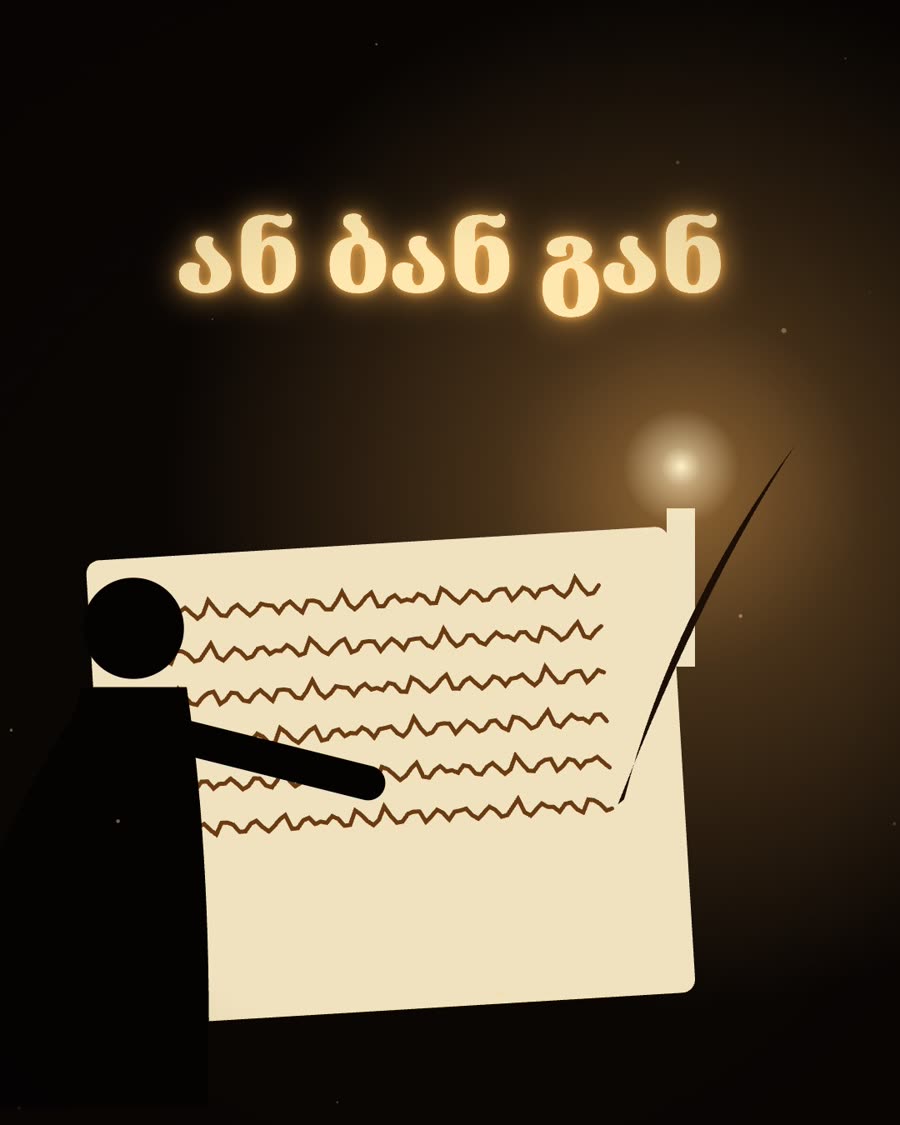
წიგნი აღარ ჰქონდა, აღარც მელანი და ეტრატი. ამიტომ ცეცხლიდან ნახშირი აიღო და მღვიმის კედელზე ასოები დაწერა — ან, ბან, გან, დონ... — ყოველ საღამოს თითო ასო, მთელი ზამთარი. ბავშვები ხმამაღლა იმეორებდნენ და მღვიმის კედლები მათ ხმას ეხმიანებოდა.
He had no books left, no ink, no parchment. So he took charcoal from the fire and wrote the letters on the wall of the cave: an, ban, gan, don... one letter every evening, all winter long. The children repeated them aloud, and the walls of the cave echoed their voices.
გაზაფხულზე ბავშვები სოფლებში დაბრუნდნენ და ყოველმა მათგანმა ათ სხვა ბავშვს ასწავლა ის, რაც მღვიმეში ისწავლა. მტერმა ერთი სკოლა გადაწვა — და ასი სკოლა დაიბადა.
In spring the children went back to their villages, and each of them taught ten other children what they had learned in the cave. The enemy had burned one school, and a hundred schools were born.
ამბობენ, იმ მღვიმის კედელზე ნახშირის ასოები დღესაც ჩანს.
They say the charcoal letters can still be seen on the wall of that cave.
შენ რობაქიძე ხარ. სანამ ანბანი გახსოვს, საქართველო ცოცხალია.
You are a Robakidze. While you remember the alphabet, Georgia is alive.
„-ძე“ ქართულად შვილს ნიშნავს. ასეთი დაბოლოების გვარები განსაკუთრებით დასავლეთ საქართველოშია გავრცელებული.
“-dze” means “son of” in Georgian. Surnames with this ending are especially common in western Georgia.
ქართულ ასოებს ძველად სახელები ჰქონდა: ან, ბან, გან, დონ... სწორედ აქედან მოდის სიტყვა „ანბანი“.
The Georgian letters once had names: an, ban, gan, don... That is where the word “anbani”, alphabet, comes from.
ქართული დამწერლობის სამი სახეობის — ასომთავრულის, ნუსხურისა და მხედრულის — ცოცხალი კულტურა UNESCO-მ 2016 წელს კაცობრიობის არამატერიალური კულტურული მემკვიდრეობის ნუსხაში შეიტანა.
In 2016 UNESCO inscribed the living culture of the three Georgian scripts, Asomtavruli, Nuskhuri and Mkhedruli, on its list of the Intangible Cultural Heritage of Humanity.
გრიგოლ რობაქიძე (1880–1962) — მწერალი და პუბლიცისტი; დაიბადა იმერეთში, სოფელ სვირში, გარდაიცვალა ჟენევაში.
Grigol Robakidze (1880–1962): writer and essayist; born in the village of Sviri in Imereti, died in Geneva.
როგორია რობაქიძეების გვარის ისტორია?
„-ძე“ ქართულად შვილს ნიშნავს. ასეთი დაბოლოების გვარები განსაკუთრებით დასავლეთ საქართველოშია გავრცელებული. ქართულ ასოებს ძველად სახელები ჰქონდა: ან, ბან, გან, დონ... სწორედ აქედან მოდის სიტყვა „ანბანი“.
What is the history of the Robakidze surname?
“-dze” means “son of” in Georgian. Surnames with this ending are especially common in western Georgia. The Georgian letters once had names: an, ban, gan, don... That is where the word “anbani”, alphabet, comes from.
როგორ ვიპოვო რობაქიძის ტელეფონის ნომერი?
ჩამოტვირთე Infosha და აკრიფე სახელი და გვარი, მაგალითად „ნინო რობაქიძე“ — შედეგში ტელეფონის ნომერს ნახავ. ძებნა დააზუსტე ქალაქით და პროფესიით. თუ ადამიანი ჯერ არ ჩანს ძებნის შედეგებში, სცადე სხვა დაწერილობაც: Robakidze, Robaqidze, Робакидзе.
How do I find the phone number of someone named Robakidze?
Download Infosha and type the first name and the surname, for example “Nino Robakidze”, and the result shows the phone number. Narrow it down by city and profession. If the person is not in the search results yet, try another spelling: Robakidze, Robaqidze, Робакидзе.
როგორ იწერება რობაქიძე ლათინურად და რუსულად?
ლათინურად — Robakidze (ტელეფონზე ხშირად ასეც წერენ: Robaqidze), რუსულად — Робакидзе.
How is რობაქიძე written in Latin letters and in Russian?
In Latin letters it is Robakidze (people also type Robaqidze); in Russian, Робакидзе.
ამბავი და ვიდეო — Infosha-სგან · Story and video by Infosha