 Infosha
ეს ამბავი გადმოცემაა და ასე მოგითხრობთ. ნამდვილი ისტორია ქვემოთაა. This story is a legend and is told as one. The real history is below.
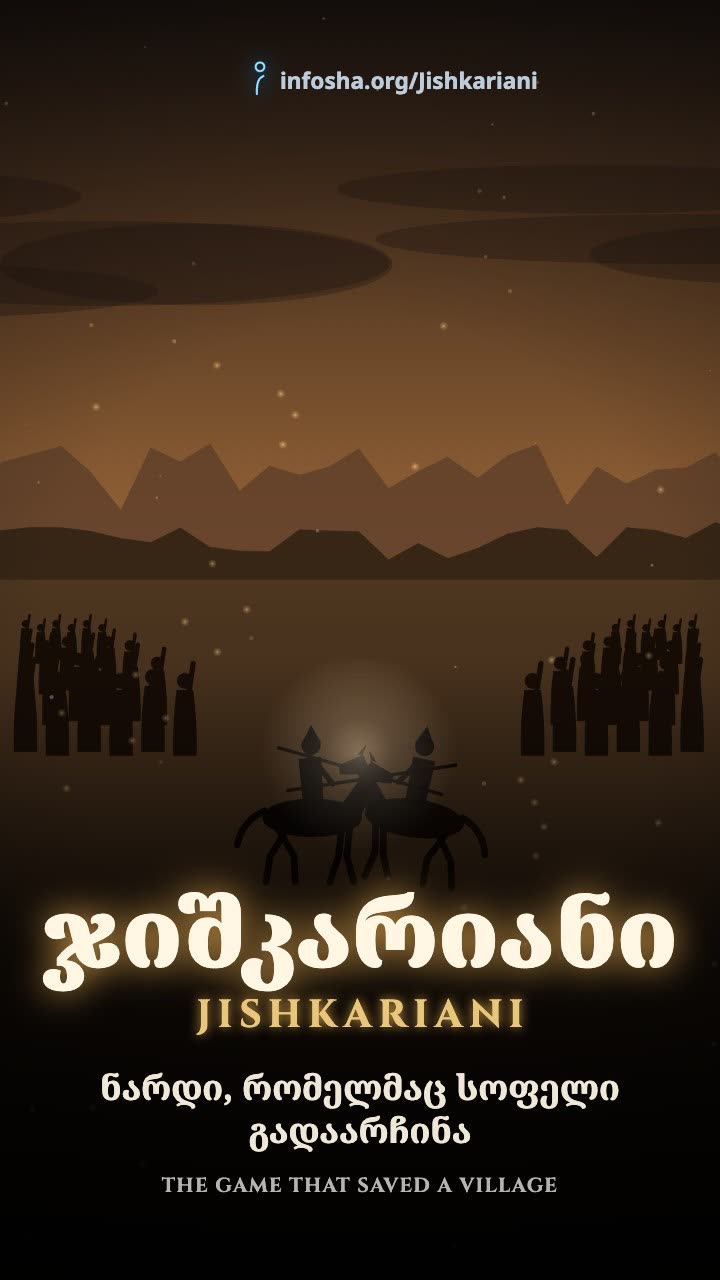
1770 წლის გაზაფხული, ასპინძა. მეფე ერეკლე მეორის ლაშქარი მტკვრის პირას იდგა, მის წინ კი მტრის ურიცხვი ჯარი იყო გაშლილი. მტრის რიგებიდან ერთი გოლიათი გამოვიდა და ქართველები ორთაბრძოლაში გამოიწვია.
Spring 1770, Aspindza. King Erekle II’s army stood on the bank of the Mtkvari, facing an enemy host beyond counting. A giant stepped out of the enemy ranks and challenged the Georgians to single combat.

ამბობენ, ქართველთა რიგებიდან ერთი ყმაწვილი გამოვიდა — ხვედელიძე, რომელსაც წვერიც კი არ ამოსვლოდა. ორივე ლაშქარმა ჩაიცინა. მეფემ ყმაწვილს მხარზე ხმალი დაადო და დალოცა, ისიც მშვიდად წავიდა გოლიათისკენ, მამის ხმლით ხელში.
They say a youth stepped out of the Georgian ranks: a Khvedelidze whose beard had not even begun to grow. Both armies laughed. The King touched the youth’s shoulder with his sword and blessed him, and the boy walked calmly toward the giant, his father’s sword in his hand.
ბრძოლა დიდხანს გაგრძელდა. ბოლოს გოლიათი მიწაზე დაეცა და ორივე ლაშქარი ერთბაშად გაჩუმდა. იმ სიჩუმეში მეფე ერეკლემ ხმალი აღმართა — და ქართველები იერიშზე წავიდნენ.
The fight went on for a long time. At last the giant fell, and both armies went silent at once. Into that silence King Erekle raised his sword, and the Georgians charged.
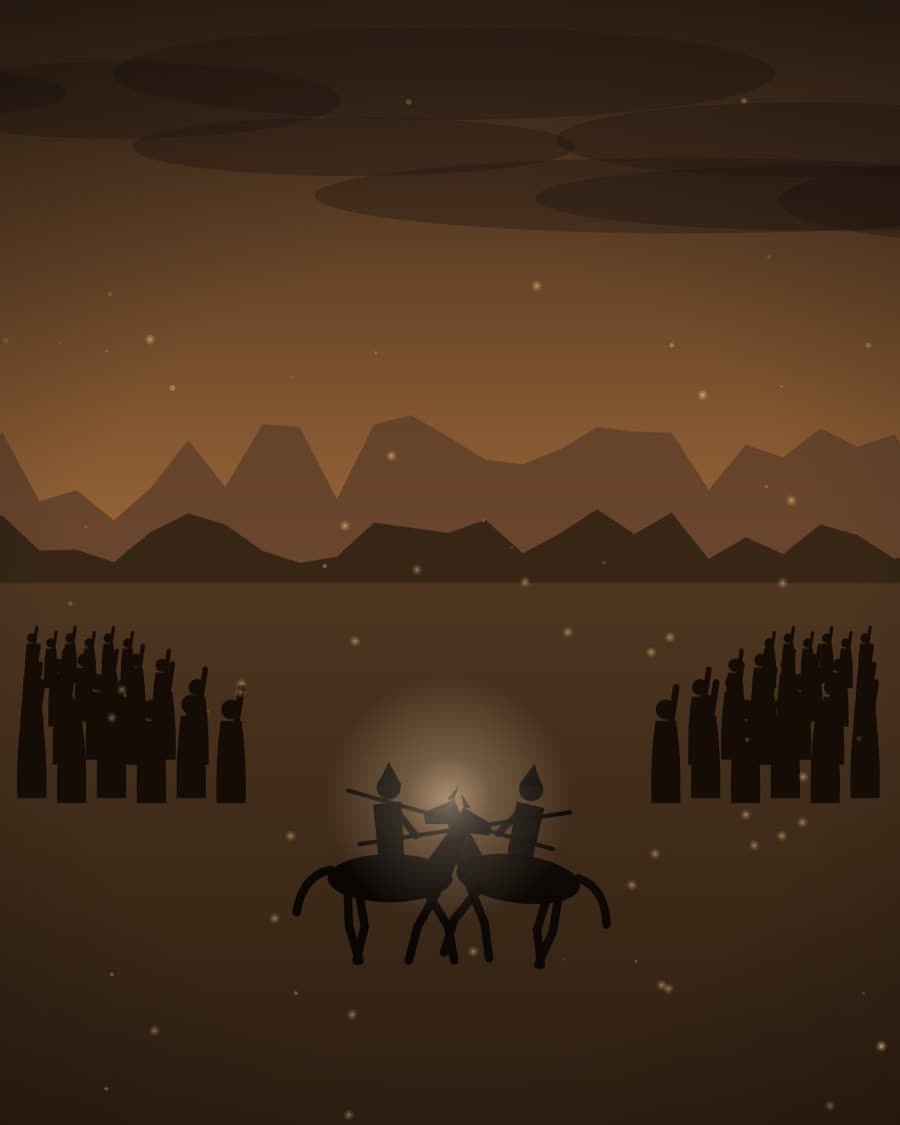
საღამოსთვის ასპინძის ველი ქართველებს დარჩა. ამბობენ, მეფემ ყმაწვილს უთხრა: „დღეს შენ ერთმა მთელ ლაშქარს გზა გაუხსენი.“
By evening the field of Aspindza belonged to the Georgians. They say the King told the youth: “Today you alone opened the way for the whole army.”

შენ ხვედელიძე ხარ. შენ წინ გოლიათიც ეცემა.
You are a Khvedelidze. Even a giant falls before you.
„-ძე“ შვილს ნიშნავს. ეს ძველი ქართული გვარების ერთ-ერთი ყველაზე გავრცელებული დაბოლოებაა, განსაკუთრებით დასავლეთ საქართველოში.
“-dze” means son. It is one of the most common endings of old Georgian surnames, especially in western Georgia.
ასპინძის ბრძოლა 1770 წლის 20 აპრილს, მესხეთში, მტკვრის პირას მოხდა: მეფე ერეკლე მეორის ლაშქარმა გაცილებით მრავალრიცხოვანი მტერი დაამარცხა.
The Battle of Aspindza was fought on 20 April 1770 in Meskheti, on the Mtkvari: King Erekle II’s army defeated a much larger enemy force.
როგორია ხვედელიძეების გვარის ისტორია?
„-ძე“ შვილს ნიშნავს. ეს ძველი ქართული გვარების ერთ-ერთი ყველაზე გავრცელებული დაბოლოებაა, განსაკუთრებით დასავლეთ საქართველოში. ასპინძის ბრძოლა 1770 წლის 20 აპრილს, მესხეთში, მტკვრის პირას მოხდა: მეფე ერეკლე მეორის ლაშქარმა გაცილებით მრავალრიცხოვანი მტერი დაამარცხა.
What is the history of the Khvedelidze surname?
“-dze” means son. It is one of the most common endings of old Georgian surnames, especially in western Georgia. The Battle of Aspindza was fought on 20 April 1770 in Meskheti, on the Mtkvari: King Erekle II’s army defeated a much larger enemy force.
როგორ ვიპოვო ხვედელიძის ტელეფონის ნომერი?
ჩამოტვირთე Infosha და აკრიფე სახელი და გვარი, მაგალითად „თამარ ხვედელიძე“ — შედეგში ტელეფონის ნომერს ნახავ. ძებნა დააზუსტე ქალაქით და პროფესიით. თუ ადამიანი ჯერ არ ჩანს ძებნის შედეგებში, სცადე სხვა დაწერილობაც: Khvedelidze, Xvedelidze, Хведелидзе.
How do I find the phone number of someone named Khvedelidze?
Download Infosha and type the first name and the surname, for example “Tamar Khvedelidze”, and the result shows the phone number. Narrow it down by city and profession. If the person is not in the search results yet, try another spelling: Khvedelidze, Xvedelidze, Хведелидзе.
როგორ იწერება ხვედელიძე ლათინურად და რუსულად?
ლათინურად — Khvedelidze (ტელეფონზე ხშირად ასეც წერენ: Xvedelidze), რუსულად — Хведелидзе.
How is ხვედელიძე written in Latin letters and in Russian?
In Latin letters it is Khvedelidze (people also type Xvedelidze); in Russian, Хведелидзе.
ამბავი და ვიდეო — Infosha-სგან · Story and video by Infosha